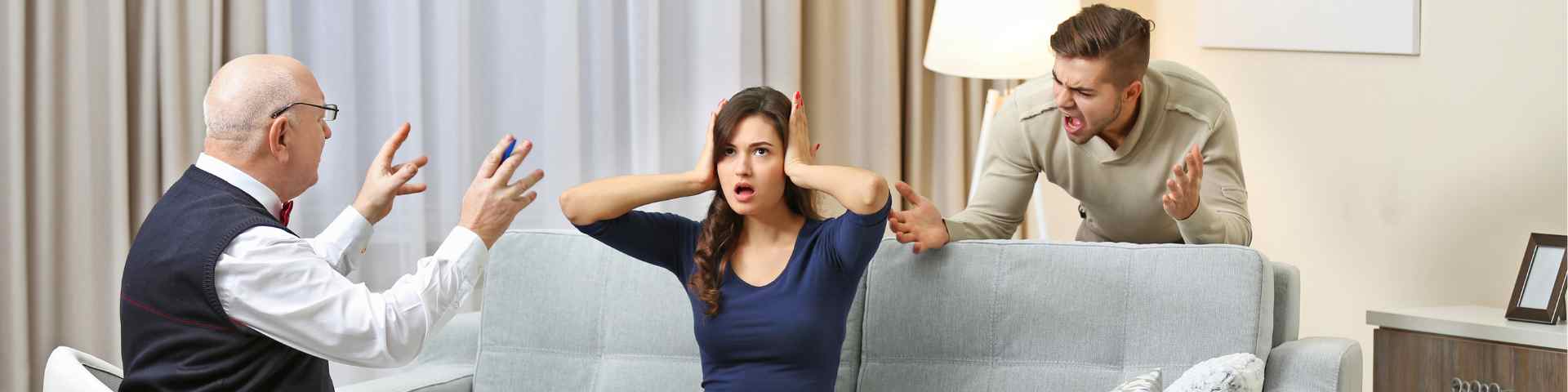
One of the greatest struggles people face in relationships is not conflict itself, but difference. We encounter it everywhere—between partners, friends, parents and children, coworkers, even siblings raised in the same home. Despite sharing blood, culture, or history, people often find themselves painfully misaligned with those closest to them. This can feel confusing and deeply personal. Yet difference is not an anomaly. It is the natural state of life.
We come from different backgrounds. We carry different karmic imprints. We are shaped by different emotional histories, cultures, religions, and inner wounds. Even two children born to the same parents, raised under the same roof, will develop in very different ways. Each soul arrives with its own inner blueprint, its own lessons, its own level of spiritual and emotional development.
If we step into a forest and observe quietly, we see this truth reflected perfectly. There are towering trees and tiny blades of grass. There are pinecones, flowers, moss, insects, birds, and animals. Nothing is the same, yet nothing is out of place. Everything exists side by side without trying to correct, dominate, or reshape the other. The forest does not demand uniformity in order to remain harmonious. Among people, however, things look very different.
The problem is not difference itself. The problem is the resistance we carry toward difference.

We do not suffer because others are different from us. We suffer because we resist reality as it is. We carry expectations—about how people should behave, how they should think, how they should show love, responsibility, or understanding. When those expectations are not met, something inside us tightens. Frustration arises. Anger, disappointment, or resentment follows.
Very often, when we feel triggered by another person, we assume they are the cause of our pain. But if we look more closely, we may discover something else: the other person has touched an unresolved emotional wound within us. A fear. A sense of abandonment. A need for approval. A longing to be seen or valued.
At that moment, the ego feels threatened.
The ego attaches itself to identities—opinions, values, beliefs, roles. “This is who I am.” “This is what is right.” “This is how people should behave.” When someone challenges these inner structures, the ego reacts defensively. Judgment appears. Comparison follows. Superiority creeps in quietly, often disguised as moral certainty.
When we judge others, we temporarily feel better about ourselves. Higher. Smarter. More evolved. But this is an illusion. No one is better or worse. There are only different inner states, different levels of awareness, different unresolved pains.
The need to be right is one of the strongest drivers of conflict in relationships. Closely linked to it is the desire for control. When we want others to think like us, feel like us, or live according to our standards, it is often because their difference makes us feel unsafe. Control promises relief—but it never delivers peace.
Another powerful source of suffering in relationships is expectation rooted in need. We often expect others to behave in certain ways because we want something from them—love, validation, security, recognition. When they fail to provide it, we feel betrayed or hurt, without recognizing the quiet contract we created in our own mind.
At our center, we hear this dynamic almost daily. People reach out seeking help for their own inner struggles, and very often they speak with great pain about someone close to them—frequently a parent. A father described as angry, distant, or emotionally unavailable. A mother seen as controlling or cold. When this happens, we gently invite them to pause and look again.
What if this father is not simply “a bad father,” but a human being carrying deep emotional pain? What if he, too, has unresolved trauma from his own childhood? What if he feels overwhelmed, defeated, or inwardly wounded? In many cases, it is also possible that such individuals are burdened by spirit possession that affect their emotional stability and behavior.
When we place someone on a pedestal—especially a parent—and expect them to be flawless, loving, and emotionally mature at all times, we deny their humanity. We forget that they, too, may feel like victims of life, struggling silently with pain they never learned how to process. Seeing this does not excuse harmful behavior. But it changes the inner posture from judgment to understanding. From resentment to compassion. Compassion does not mean agreement. It means recognizing suffering where we once saw only fault.
Our society has grown increasingly intolerant of disagreement. There was a time when people could argue fiercely, hold opposing views, and still share a meal afterward. Today, disagreement often leads to separation, hostility, and complete breakdown of communication. Families stop speaking. Friends disappear. Communities fracture.
This is deeply painful—and unnecessary. Diversity within families, relationships, and societies is inevitable. Without it, life would be stagnant and unimaginative. Growth happens through contrast. Understanding is refined through difference. What we truly need to learn is how to coexist with disagreement without closing our hearts.
To say, “We do not agree—and that is okay.”
When we stop resisting difference, relationships soften. When we become curious about our triggers instead of defending against them, something loosens inside. And when we recognize that everyone is acting from their own inner state—often shaped by pain we cannot see—compassion becomes possible. Peace in relationships does not come from changing others. It comes from meeting reality without resistance.
Just like the forest does.
About the Author:
Marianna oversees the daily operations of The Dr. Wanda Pratnicka Center, skillfully advising staff members on guiding clients through the spirit removal process. Her efforts extend beyond management; she is dedicated to raising awareness about the phenomenon of spirit possession, utilizing various platforms including events, books, and digital media. In her leisure time, Marianna delights in gardening, immerses herself in reading, and explores new natural wonders.
Stay tuned for enlightening new blog posts EVERY SUNDAY - your weekly dose of inspiration and guidance.
----
ADDITIONAL RESOURCES:
1. You can find more information about common symptoms of spirit attachment / possession here:
2. How to check whether you or your loved one are experiencing a spirit attachment?
3. Want to learn more about how we remove spirits?
Load more
We offer FREE CONSULTATION.
Simply give us a call.
The Dr. Wanda Pratnicka Center
4602 21st Street PO BOX 1285
New York, NY 11101
Disclaimer: Our services are not intended to replace allopathic medicine, but rather to complement it. We do not prescribe any medications and/or medical treatments nor interfere with prescribed medications and/or medical treatments. The Dr. Wanda Pratnicka Center, nor any of its members, is not responsible for any individual's failure to seek proper medical attention.
If you are in a crisis or any other person may be in danger - don't use this site. These resources can provide you with immediate help.
Copyright © 2025 by The Dr. Wanda Pratnicka Foundation, All rights reserved






















 US
US 