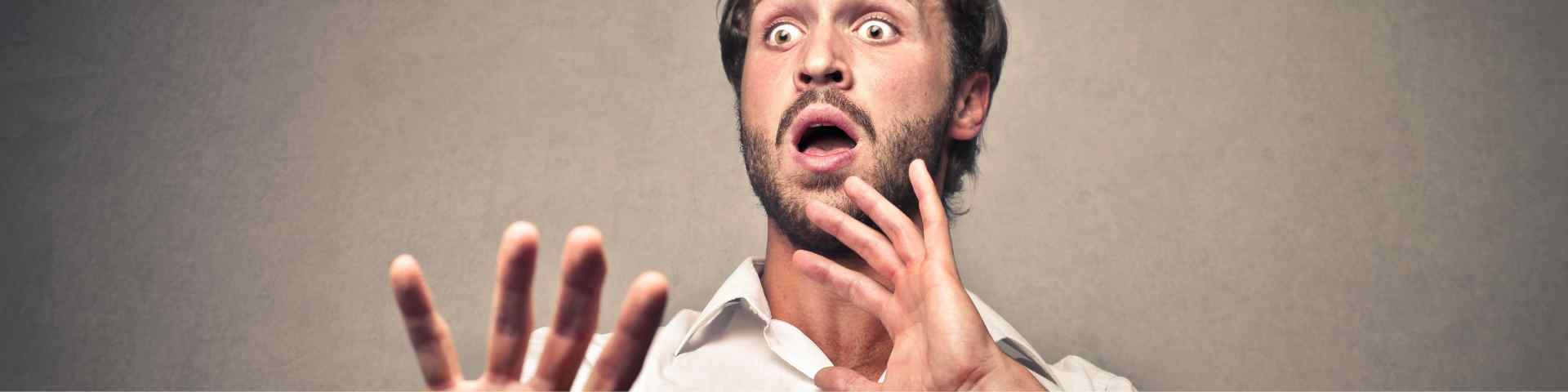
Fear is one of the most primal emotions a human being can experience. In its purest form, it serves a purpose. It protects us. It warns us. It is the quiet inner alarm that says: be careful. But fear rarely remains in that pure state for long. More often than not, it becomes something else entirely. Something far heavier. Something that slowly wraps itself around the mind until a person no longer knows whether they are thinking clearly — or simply reacting.
The moment a human being enters a deep state of fear, rational thought begins to weaken. The part of us capable of reflection, discernment, and calm observation slowly fades into the background. The nervous system takes over. Fight. Flight. Freeze. And in that state, people become vulnerable. A frightened person instinctively looks for certainty. Someone who claims to have answers. Someone who appears stronger, calmer, more “in control.” This pattern is ancient. It has repeated itself throughout human history endlessly, in different forms, under different names.
First, a threat is introduced — real or exaggerated, it hardly matters. What matters is that it becomes emotionally alive inside the imagination. Then comes helplessness: you cannot handle this on your own... you are too weak... too uninformed... too vulnerable. And only after fear and powerlessness have fully taken root does the rescuer appear. A political movement. A leader. An institution. A system. A belief structure. And the message is always remarkably similar: Only with us will you be safe. This mechanism has survived for centuries because it works. A fearful human being is easier to direct, easier to influence, easier to predict.

The uncomfortable truth is that much of modern life continuously feeds this emotional state. Fear is woven into media, politics, advertising, social systems, even relationships. Not necessarily because humanity consciously designed a grand conspiracy — but because fear became embedded into the very structure of civilization itself over thousands of years. We inherited it. Then unknowingly strengthened it.
There is also a deeper dimension to fear — one rarely discussed openly. Every emotion humanity has ever generated leaves an imprint. Rage. Hatred. Jealousy. Despair. Humiliation. And beneath nearly all of them, fear. From a spiritual perspective, these emotions accumulate over time within the collective emotional field of humanity. Every panic, every terror, every moment of helplessness contributes to an enormous energetic reservoir that has existed since the beginning of human history.
And when a person falls into fear, they unconsciously connect to it. This is why fear can suddenly feel overwhelming beyond logic. It no longer feels like a single emotion triggered by one event. Instead, it becomes enormous — ancient almost — as though something much larger is moving through the person. At that point, rational thinking weakens even further. Emotional balance deteriorates. Helplessness deepens. And this is also where the spiritual dimension begins to overlap with the emotional one.
In our work over many decades, we have repeatedly observed that spirits who remain attached to the earthly plane often exist within these lowest emotional layers. Many of them did not move on after death because they were consumed by fear, anger, bitterness, addiction, hatred, or emotional suffering. Their consciousness remained trapped close to physical reality.
As described extensively in the bestselling book Possessed by Ghosts, these spirits continue existing within emotional states they never transcended. They are not always intentionally malicious. Many are simply immersed in fear because fear became their entire reality.
It is the atmosphere they exist within. And when human beings remain in prolonged states of anxiety, panic, resentment, or emotional chaos, resonance begins to occur. Fear recognizes fear. Most people cannot distinguish between emotions originating within themselves and emotions amplified through spiritual influence. During periods of intense emotional instability, this resonance can become so strong that spirit attachment becomes significantly easier. This is not symbolism to us. It is something we have witnessed in our work for decades.
One of the greatest misunderstandings about courage is the belief that brave people do not feel fear. They do. The difference is that they do not surrender themselves to it completely. A truly courageous person learns to observe fear without allowing it to take control of the mind. They recognize its presence early, before it expands and consumes their inner world. Because once fear grows beyond a certain threshold, clarity disappears.
The mind narrows. Emotional balance collapses. And the person becomes increasingly connected to the collective field of panic and helplessness surrounding humanity. Managing fear wisely does not mean suppressing it or pretending it does not exist. It means becoming conscious enough to witness it without obeying it automatically. That awareness changes everything.
There is a way out of this cycle, but it requires inner discipline. A person must gradually learn to regain authority over their own thoughts, emotional reactions, and inner state. This cannot happen through avoidance alone. Nor through distraction. It requires conscious practice. Meditation. Concentration. Emotional self-observation. Quiet moments of stillness where the mind slowly becomes less reactive and more awake. Simple practices, repeated consistently, can begin changing the entire emotional structure of a person over time.
Otherwise, fear continues governing life from beneath the surface. And human beings were never meant to live imprisoned by fear. At the deepest level of our existence — beneath personality, survival instincts, and emotional conditioning — there is something untouched by fear entirely. Many spiritual traditions refer to it as the divine spark within us. Fear belongs to the human condition. To the body. To survival. To the ego. But it does not belong to the deepest essence of who we truly are.
At the Wanda Pratnicka Center, we help people who struggle with spirit attachment and unwanted spiritual influences by remotely leading spirits away. Yet over the years we have learned something important: Spiritual intervention alone is not always enough if nothing changes internally. If a person remains consumed by fear, emotional chaos, resentment, or unconscious suffering, the energetic attraction may eventually repeat itself.
This is why our work always focuses on two elements simultaneously: helping remove unwanted spiritual influences while also supporting emotional and mental awareness within the person themselves. Real freedom begins there. Not merely freedom from spirits — but freedom from fear itself. The next time you feel a powerful wave of anxiety or emotional panic, pause for a moment. Take one conscious breath. And ask yourself: How do I know this fear is true? Who taught me to fear this? Who benefits from my fear? These questions may not immediately give you answers. But they create space. And sometimes, space is the very beginning of freedom.
About the Author:
Michael, a co-founder of The Dr. Wanda Pratnicka Center, holds a B.A. degree in psychology and is a spiritual teacher and healer, with a specialization in spirit removal. Under the mentorship of his wife Wanda Pratnicka, Michael gained profound spiritual insights into the nuances of spirit attachment phenomenon, and for many years, he played a crucial role in assisting her with the remote spirit removal process. In his leisure time, Michael finds solace in meditation, immerses himself in the timeless beauty of classical music, and cherishes tranquil walks by the sea.
Stay tuned for enlightening new blog posts EVERY SUNDAY - your weekly dose of inspiration and guidance.
----
ADDITIONAL RESOURCES:
1. You can find more information about common symptoms of spirit attachment / possession here:
2. How to check whether you or your loved one are experiencing a spirit attachment?
3. Want to learn more about how we remove spirits?

August 1, 2026
Load more
We offer FREE CONSULTATION.
Simply give us a call.
The Dr. Wanda Pratnicka Center
4602 21st Street PO BOX 1285
New York, NY 11101
Disclaimer: Our services are not intended to replace allopathic medicine, but rather to complement it. We do not prescribe any medications and/or medical treatments nor interfere with prescribed medications and/or medical treatments. The Dr. Wanda Pratnicka Center, nor any of its members, is not responsible for any individual's failure to seek proper medical attention.
If you are in a crisis or any other person may be in danger - don't use this site. These resources can provide you with immediate help.
Copyright © 2026 by The Dr. Wanda Pratnicka Foundation, All rights reserved



















 US
US 