There are moments in life when something inside us grows quiet—not the peaceful kind of quiet, but a heavy stillness. A sense that something is missing, or perhaps that something hurts without a clear name. In such moments, many people begin to wonder: Is this all there is? Will this ever change?
The teachings of the Gautama Buddha begin precisely there—not in perfection, not in certainty, but in the honest recognition that life can feel difficult, confusing, and, at times, deeply painful. And yet, what makes these teachings so enduring is not that they dwell on suffering, but that they illuminate a way through it—with clarity, dignity, and quiet hope.
The Buddha did not promise a life free from hardship. Instead, he offered something far more meaningful: the understanding that suffering is not random, nor is it permanent. It has causes. And what has causes can also come to an end. This idea alone can gently shift something inside us. Because if what you are feeling today has a cause, then it is not who you are. It is not your identity. It is not your destiny. It is a condition—one that has arisen, and one that can pass.
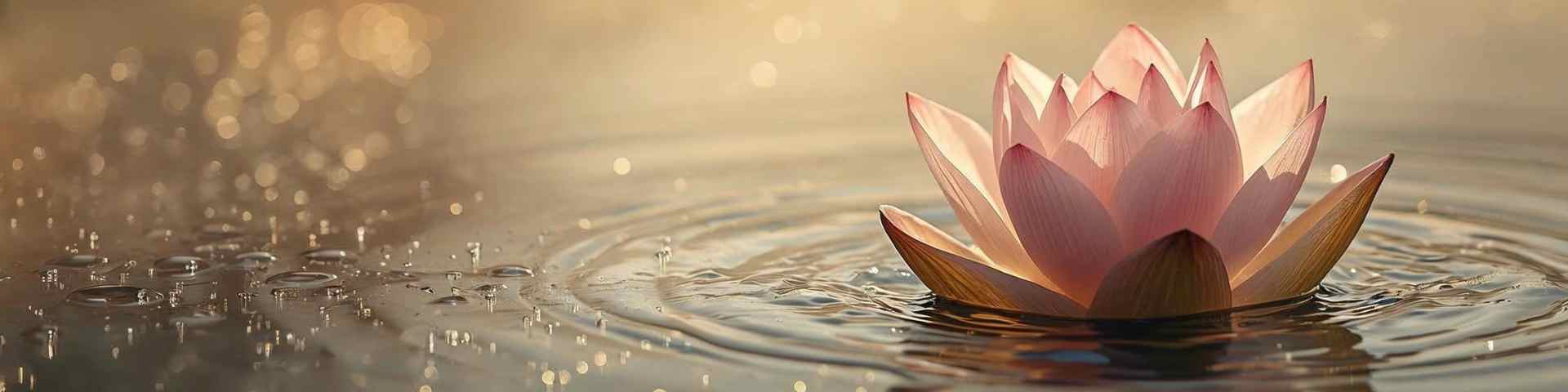
The Buddha often spoke of the mind as something fluid, like water. Sometimes calm and reflective, sometimes stirred by winds we barely understand. When the water is disturbed, we cannot see clearly. We react, we grasp, we resist. But when it becomes still—even for a moment—something changes. We begin to see not only the world more clearly, but ourselves. And this is where hope quietly begins—not in forcing life to be different, but in learning how to meet it differently.
One of the most gentle yet powerful teachings is the practice of awareness. Simply noticing what is happening within you, without immediately judging it or trying to push it away. If sadness is there, you notice sadness. If fear is there, you notice fear.
This may sound simple, but it is not small. Because in that moment of noticing, something subtle occurs: you are no longer completely inside the emotion. There is a space. And in that space, there is freedom.

The Buddha taught that much of our suffering does not come from what happens to us, but from how tightly we hold on—to expectations, to identities, to the idea that things must be a certain way. We cling to what feels good, and we resist what feels painful. And in that constant push and pull, we exhaust ourselves. But what if, instead of tightening, we softened—just slightly? Not giving up. Not becoming passive. But allowing things to be as they are, even for a moment.
In that softening, life often reveals something unexpected: that we are stronger than we thought, and that many of the things we feared we could not endure… we already have.
Another thread that runs deeply through the Buddha’s teachings is compassion—not only toward others, but toward oneself. Many people carry an inner voice that is harsh, demanding, or endlessly critical. It whispers that we should be further along, stronger, more in control. It measures, compares, and often finds us lacking. But the Buddha’s path does not grow in that kind of soil. It grows in kindness.
To look at yourself—not as a problem to fix, but as a human being doing their best within the conditions of their life—is a profound shift. It does not mean ignoring your mistakes or avoiding responsibility. It means holding yourself with the same understanding you might offer someone you deeply care about.
And from that place, real change becomes possible. Because we do not transform through punishment. We transform through understanding.
The Buddha also spoke of impermanence—that everything in life is constantly changing. At first, this can feel unsettling. We want things to last: happiness, love, security. But if we look more closely, impermanence is not only the reason things pass—it is also the reason things can improve. If pain can arise, it can also fade. If darkness can come, it can also lift. If today feels heavy, it does not mean tomorrow will feel the same. There is a quiet reassurance in this: no state, no matter how intense, is fixed forever.
And perhaps one of the most comforting aspects of these teachings is their simplicity. You do not need to become someone else. You do not need to achieve something extraordinary. The path begins exactly where you are—with a single breath, a single moment of awareness, a single act of kindness. Even now, as you are reading this, you might pause for just a moment.
Notice your breath. Notice your body. Notice that, despite everything, you are here.
There is life moving through you. There is still something unfolding. And within that unfolding, there is always the possibility—however small it may seem—of a different way of being.
Hope, in the Buddha’s teaching, is not loud or forceful. It does not insist that everything will be easy or that pain will never return. It is quieter than that, but also more reliable. It is the steady knowing that no matter what arises, you are not powerless within it. You can learn to see more clearly. You can learn to respond more gently. You can learn to loosen what has felt tightly held. And over time, almost without noticing, something begins to shift. Not all at once. Not perfectly. But genuinely.
A little more space. A little more calm. A little more ease. And perhaps that is enough for now. Not a complete transformation, not a final answer—but a small opening. And sometimes, a small opening is all that is needed for light to begin to enter.
About the Author:
Marianna oversees the daily operations of The Dr. Wanda Pratnicka Center, skillfully advising staff members on guiding clients through the spirit removal process. Her efforts extend beyond management; she is dedicated to raising awareness about the phenomenon of spirit possession, utilizing various platforms including events, books, and digital media. In her leisure time, Marianna delights in gardening, immerses herself in reading, and explores new natural wonders.
Stay tuned for enlightening new blog posts EVERY SUNDAY - your weekly dose of inspiration and guidance.
----
ADDITIONAL RESOURCES:
1. You can find more information about common symptoms of spirit attachment / possession here:
2. How to check whether you or your loved one are experiencing a spirit attachment?
3. Want to learn more about how we remove spirits?

April 4, 2026
Load more
We offer FREE CONSULTATION.
Simply give us a call.
The Dr. Wanda Pratnicka Center
4602 21st Street PO BOX 1285
New York, NY 11101
Disclaimer: Our services are not intended to replace allopathic medicine, but rather to complement it. We do not prescribe any medications and/or medical treatments nor interfere with prescribed medications and/or medical treatments. The Dr. Wanda Pratnicka Center, nor any of its members, is not responsible for any individual's failure to seek proper medical attention.
If you are in a crisis or any other person may be in danger - don't use this site. These resources can provide you with immediate help.
Copyright © 2025 by The Dr. Wanda Pratnicka Foundation, All rights reserved






















 US
US 