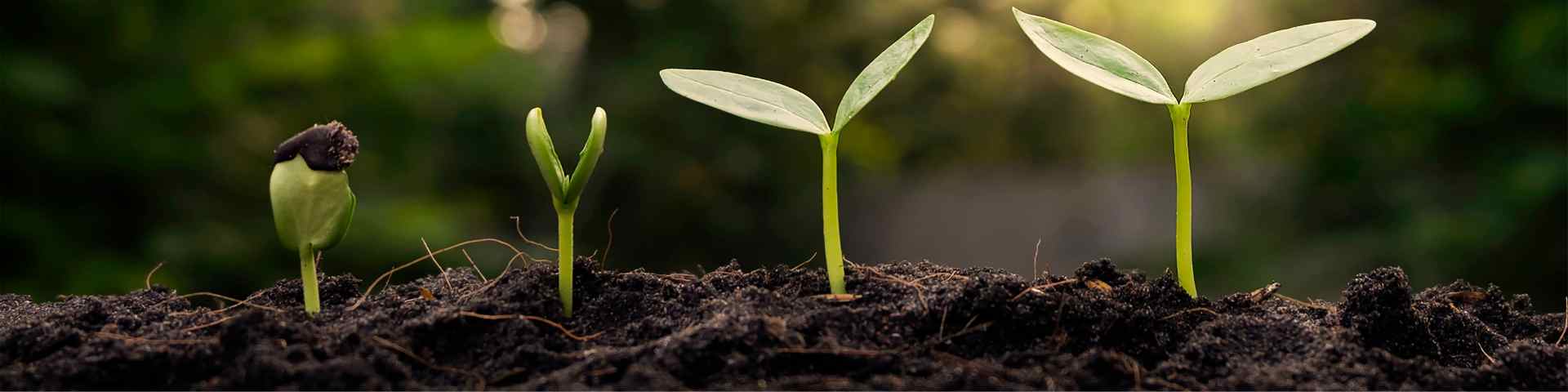
Time passes. The children grow up and begin lives of their own. The responsibilities that once filled our days gradually fall away. And somewhere along the way, often in middle age or later, a quiet but persistent thought begins to surface: I haven't accomplished enough. I haven't done everything I wanted to do. I'm running out of time.
At first, this thought may seem harmless, perhaps even like an honest assessment of our lives. But it carries a hidden danger. It is rooted in negative thinking, and negative thoughts, when we repeatedly give them our attention, can influence how we feel, what we believe about ourselves, and how we experience the years ahead.
We live in a perfect Universe, a reality in which everything serves the purpose of evolution—not only the evolution of the cosmos itself, but also that of every being within it. This extraordinary system continuously creates opportunities for growth. And not just for human beings. Everything that exists participates in this process: stones, plants, animals, people, and countless other kingdoms of existence that remain invisible to our physical eyes.
Put simply, the Universe is in a constant state of evolution. Everything within it is meant to grow, and the circumstances of our lives are arranged to provide opportunities for that growth. The reality you find yourself in right now, whatever it may look like, offers precisely the conditions through which you can develop, overcome your weaknesses, and discover abilities you may not even realize you possess.
Being middle-aged or considerably older changes none of this. It is only your own thinking that whispers, I'm not as capable as I used to be. My abilities are fading. My best years are behind me. But that is not the whole truth. You can continue developing your abilities at every stage of life. New possibilities remain open to you, every single day. Whether you are a man or a woman, healthy or seriously ill, physically able or living with a disability, the opportunity for inner growth remains. Your race, upbringing, and social standing do not determine how far you can evolve.

History offers beautiful reminders of this. Anna Mary Robertson Moses, affectionately known as Grandma Moses, began painting seriously at around the age of 78. Her work eventually received international recognition. And today, neuroscience has shown that the brain can continue forming and reorganizing neural connections throughout life, a remarkable ability known as neuroplasticity. What spiritual teachers have spoken about for centuries—that growth does not end simply because we grow older—now finds an interesting parallel in scientific research.
If the number of years you have lived leaves you feeling discouraged, consider where that belief came from. Perhaps you inherited it from your parents, absorbed it from society, or gradually developed it through your own experiences.
For generations, people have observed that the physical body becomes less capable with age and drawn a troubling conclusion: as the body declines, so does the person. But from a spiritual perspective, this conclusion overlooks something essential. Your physical body may become less capable, yet you are not merely your physical body. Certain emotional states may fade or change, but you are not your emotions. Even if your mental abilities fluctuate or become less sharp with age, you are still far more than the thoughts passing through your mind.
Consider Stephen Hawking, the British theoretical physicist whose research transformed our understanding of black holes and the Universe. At 21, following his diagnosis of motor neuron disease, he was told he might have only two years to live. Instead, he continued his work for more than half a century, despite profound physical limitations. His life reminds us that the abilities of the body do not define the full extent of human potential.
When you dedicate yourself to a meaningful purpose—one that benefits not only you but, importantly, other people as well—you can continue cultivating your physical, emotional, and intellectual abilities throughout your life, even as the ways you express them change. And beyond all these abilities lies something greater: your spiritual nature, the consciousness of your divine spark, your Higher Self.
Unlike the physical body, this higher consciousness does not diminish with age. It continues to evolve, drawing wisdom from the experiences of the human being through whom it expresses itself. Yes, the physical body will eventually reach the end of its life. But you are not merely that body. Nor are you simply your emotions or the thoughts that fill your mind. You are something much, much greater.
From this spiritual understanding, what truly matters is the development of your spiritual being. And that possibility is not limited to the years you spend on Earth. It continues into eternity. It is a gift from God Himself.
Why is thinking in terms of limitations so harmful? Consider two thoughts that often appear as we grow older: I haven't accomplished enough and I'm getting too old. Both can pull us into discouragement. And from the perspective of an eternal soul, neither tells the complete truth.
What does it really mean to say you haven't accomplished enough when your existence extends far beyond a single lifetime? In the vastness of eternity, there is time to learn, grow, and eventually experience everything your soul is meant to discover. And what does it mean to say you are becoming old? Your physical body is aging, certainly. But your soul, despite eons of existence, has not grown older by even half a second.
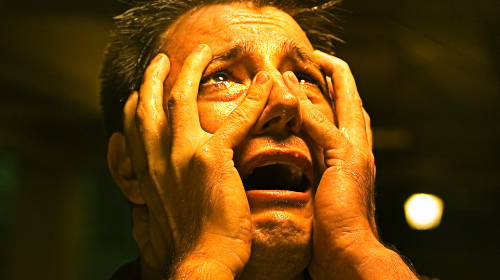
Imagine a man experiencing a midlife crisis. He repeatedly thinks about the years behind him, the opportunities he believes he has missed, and the time he fears is running out. Without realizing it, he may begin making his situation considerably worse. His mood declines. His enthusiasm fades. His vitality seems to diminish, and with it, his willingness to explore new possibilities. The physical body responds to prolonged discouragement and stress. Emotionally, he becomes increasingly withdrawn. His thoughts lose their energy and optimism. Little by little, the hopeful outlook he once possessed gives way to the pessimism he now associates with growing older.
In spiritual terms, we might describe this as a lowering of vibration. Psychologically, repeated negative thinking can reinforce patterns of discouragement, making it increasingly difficult to recognize the opportunities that still exist. This tendency is something we must consciously work to overcome. When we begin directing our attention toward higher possibilities, our entire experience can change. The physical body may benefit from a more hopeful, engaged approach to life. Emotionally, we can rediscover enthusiasm, affection, devotion, and the desire to help others without expecting anything in return.
Our thinking becomes more expansive as well. Instead of spending so much energy worrying about survival, tomorrow's difficulties, or everything that might go wrong, we begin contemplating ideas that inspire us and give our lives meaning. We stop asking only, How am I going to get through tomorrow? And begin asking, What can I contribute? What can I learn? How can I grow?
From the spiritual perspective we are exploring, there is another danger associated with remaining in prolonged states of negativity. Spiritual teachings concerning spirit attachment describe the existence of deceased spirits whose consciousness remains at a very low energetic level. According to this understanding, when we repeatedly surrender to despair, bitterness, or other deeply negative states, our own vibration may begin to resemble theirs.
The belief is that similar energies attract one another. Their negativity resonates with ours, and ours with theirs. In this spiritual framework, such a condition may increase a person's vulnerability to spirit attachment, adding another difficulty to the emotional suffering already present. This is a spiritual interpretation, rather than a scientifically established explanation of emotional distress.
Within our work, we believe it is possible to help a person through a spirit removal process. Yet even after such assistance, an essential part of the work remains with the individual. Why? Because the thought patterns that contributed to their difficulties may still be present. Over time, repeated thoughts can strengthen familiar patterns of thinking. In neuroscience, this is associated with changes in neural pathways. From a spiritual perspective, we also speak of thought forms—energetic patterns created and reinforced by our habitual thoughts.
If someone continues returning to the same destructive beliefs, those patterns may continue influencing their emotional and spiritual well-being. This is why prevention matters so much. Rather than allowing ourselves to sink further into pessimism, we can begin cultivating a more optimistic, conscious relationship with our thoughts. And it doesn't have to be complicated.
The next time you catch yourself thinking, It's too late or I haven't done enough, don't fight the thought. Don't criticize yourself for having it. Simply stop for a moment. Take a few slow, gentle breaths. Then ask yourself two questions: What can I learn today? Who can I help today? Even a small answer matters. Every time you consciously choose a different response, you begin strengthening a new pattern of thinking. With repetition, these choices can help create new neural pathways and gradually change the way you experience your life.
Remember that, according to the spiritual understanding of reincarnation, the eventual passing of the physical body—and, beyond physical death, the gradual dissolution of the emotional and lower mental bodies—is part of our preparation for another incarnation. And you, the person reading these words, are the Higher Self that will incarnate again. Yes, you. Not some distant being sitting on a cloud. Not a separate spiritual entity watching your life from somewhere far away. Your Higher Self is your deepest identity, the enduring consciousness that continues gathering experience through successive lifetimes.
From this perspective, the thoughts you cultivate today matter far beyond your present circumstances. When you repeatedly surrender to negativity, you are not simply making your current life more difficult. You are also, in a spiritual sense, helping shape the tendencies and patterns that may accompany you into future experiences.
Why would you want to carry unnecessary suffering forward when you have the opportunity to begin changing those patterns now? So do something kind for yourself. Don't surrender your life to negative thinking. It offers you nothing worth holding on to and may take away the very enthusiasm, hope, and openness that allow you to recognize life's possibilities. You have not missed your chance to grow. Your life has not become less meaningful because more years are behind you than ahead of you.
There is still something to learn. Someone to love. Something good to offer the world. Your body grows older. Your soul never does. Let your soul lead the way.
About the Author:
Michael, a co-founder of The Dr. Wanda Pratnicka Center, holds a B.A. degree in psychology and is a spiritual teacher and healer, with a specialization in spirit removal. Under the mentorship of his wife Wanda Pratnicka, Michael gained profound spiritual insights into the nuances of spirit attachment phenomenon, and for many years, he played a crucial role in assisting her with the remote spirit removal process. In his leisure time, Michael finds solace in meditation, immerses himself in the timeless beauty of classical music, and cherishes tranquil walks by the sea.
Stay tuned for enlightening new blog posts EVERY SUNDAY - your weekly dose of inspiration and guidance.
----
ADDITIONAL RESOURCES:
1. You can find more information about common symptoms of spirit attachment / possession here:
2. How to check whether you or your loved one are experiencing a spirit attachment?
3. Want to learn more about how we remove spirits?
We offer FREE CONSULTATION.
Simply give us a call.
The Dr. Wanda Pratnicka Center
4602 21st Street PO BOX 1285
New York, NY 11101
Disclaimer: Our services are not intended to replace allopathic medicine, but rather to complement it. We do not prescribe any medications and/or medical treatments nor interfere with prescribed medications and/or medical treatments. The Dr. Wanda Pratnicka Center, nor any of its members, is not responsible for any individual's failure to seek proper medical attention.
If you are in a crisis or any other person may be in danger - don't use this site. These resources can provide you with immediate help.
Copyright © 2026 by The Dr. Wanda Pratnicka Foundation, All rights reserved



















 US
