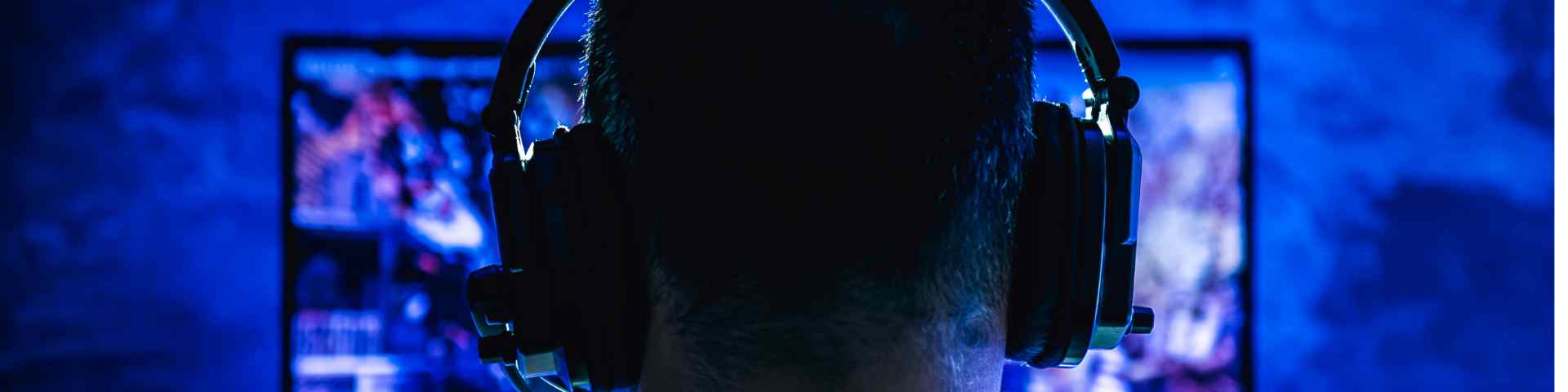
If you are reading this, chances are you have already noticed something is wrong. Your child, grandchild, student, or someone in your care is spending far more time playing video games than seems healthy—and your reminders, requests, arguments, or attempts to set limits are no longer making much difference.
Modern life offers countless ways to escape from what we do not want to feel. Alcohol, drugs, gambling, shopping, food, social media, pornography—these are some of the most common addictive behaviors people struggle with today. Increasingly, video games belong on that list as well.
This is no longer a marginal problem. Gaming addiction and gaming disorder affect children, teenagers, and young adults on a scale that would have been difficult to imagine only a generation ago. And because gaming can look harmless from the outside—after all, it is “just a game”—parents and caregivers may not immediately recognize how serious the problem has become.
Yet when gaming begins to take over a young person’s life, the consequences can be profound. Relationships suffer. Responsibilities disappear into the background. Sleep, school, health, and emotional balance may slowly deteriorate. It is worth recognizing what is happening before dismissing the problem as laziness, stubbornness, or simply a phase.
Addictive behavior usually has something underneath it. Obsessive gaming is rarely only about the game itself. Quite often, the young person is trying to escape from something they do not know how to face.

There may be fear hidden beneath the surface. Loneliness. Anger. Rejection. Family conflict. Low self-esteem. Pressure at school. Painful experiences that have never really been processed. Sometimes the young person could not explain what is wrong even if you asked directly. They simply know that while they are playing, they do not have to think about it. For a few hours, the game moves their attention somewhere else. That relief is part of what makes the pattern so difficult to break.
Gaming can become an emotional refuge in much the same way that alcohol, drugs, gambling, or other compulsive behaviors do. But there is a trap hidden inside that refuge. The more a person avoids what frightens or hurts them, the less opportunity they have to understand it and work through it.
From the perspective taught at the Dr. Wanda Pratnicka Center, prolonged fear, resentment, anger, jealousy, hatred, and other painful emotional states can also lower a person's inner vibration. As those emotions become stronger, the desire to escape may grow stronger with them. Before responding only with punishment, restrictions, or another lecture about self-control, it may therefore be worth asking a different question: what is this young person actually trying not to feel?
Video game developers understand human motivation extremely well. Games are built around rewards: reaching another level, winning a battle, unlocking an item, earning points, receiving an unexpected prize.
These rewards engage brain systems involving dopamine, a neurotransmitter strongly connected with motivation, learning, anticipation, and reward. When rewards appear frequently—or unpredictably—the desire to keep playing can become remarkably strong. That is one reason some gaming systems use mechanisms that resemble those found in gambling: uncertainty encourages the player to try one more time. Then one more. And another. Understanding this matters, because what looks from the outside like a simple lack of willpower may involve a much more powerful behavioral pattern.
From the Center's spiritual perspective, however, there may also be another layer. We believe that addictive states can sometimes make a person more vulnerable to the influence of souls of deceased people who have not moved on. In our understanding, these spirits are drawn to people whose emotional state resembles their own—particularly when there is intense fear, grief, anger, resentment, or another heavy emotion.
This can create a cycle. The emotional distress encourages the young person to escape into gaming; the obsessive behavior intensifies; painful emotions grow stronger; and the need to escape becomes greater still. What began as an hour of gaming after school can slowly become five hours. Then eight. Sometimes ten or more.
The consequences of gaming addiction can resemble those seen with other serious compulsive behaviors. A young person may gradually withdraw from family life, argue when gaming is interrupted, neglect schoolwork or other responsibilities, lose interest in activities they once enjoyed, or maintain friendships almost entirely through the game.
Their emotional state may change as well. Depression, irritability, sudden anger, anxiety, or extreme frustration when they cannot play may appear. Money can become another problem, particularly in games built around repeated purchases, upgrades, virtual items, or other in-game spending. Physical health may also be neglected. Sleep becomes irregular. Meals are skipped. Exercise disappears. Personal hygiene may suffer.
In the most extreme situations, gaming can consume nearly every waking hour. There have been reported cases internationally in which people experienced severe medical consequences during exceptionally long gaming sessions involving prolonged sleep deprivation, physical inactivity, and inadequate food or fluids. These cases are uncommon, but they show just how far obsessive behavior can sometimes progress.
More often, however, the deterioration happens quietly. The bedroom door stays closed longer. Family meals are skipped. School performance slips. Conversations become shorter. Friends exist mainly online. Attempts to interrupt the game trigger anger that seems completely out of proportion to the situation. If you recognize several of these signs, another conversation about “having more willpower” may not be enough. Something deeper may need attention.
In 2018, the World Health Organization included gaming disorder in the 11th revision of the International Classification of Diseases, or ICD-11. WHO defines gaming disorder as a pattern involving impaired control over gaming, increasing priority given to gaming over other activities, and continued or escalating gaming despite negative consequences. For a clinical diagnosis, the behavior must normally be severe enough to cause significant impairment in areas such as family, education, work, or social functioning.
The numbers are significant. A large systematic review and meta-analysis published in 2026 examined 93 studies involving 149,601 young adults between the ages of 18 and 35. Researchers estimated the pooled prevalence of Internet Gaming Disorder at approximately 6.1%. Among samples consisting specifically of gamers, the figure was higher, at about 8.1%. Research focused on adolescents has likewise found substantial rates, although estimates differ considerably depending on the country, population, and diagnostic method used. Males also tend to show higher prevalence than females in many studies. In other words, if your child or someone you care for is struggling with compulsive gaming, you are far from the only family facing this problem.
From the perspective of the Dr. Wanda Pratnicka Center, removing the souls of deceased people who may have become attached to a young person can be one important part of helping them. Within our approach, we believe that spirit attachment may intensify obsessive thoughts, emotional distress, and the powerful urge to continue an addictive behavior.
One caregiver whose son struggled severely with gaming later told us that, after the spirits had been removed, her son asked for the computer—and even the desk it had been sitting on—to be taken out of his room. For his family, the change was striking.
Experiences such as this are one reason we believe spiritual influence should not automatically be overlooked when compulsive behavior becomes unusually intense. At the same time, removing what we consider the spiritual influence is not the end of the work. Addiction leaves patterns behind.
Thoughts, habits, emotional wounds, avoidance, and learned behaviors do not necessarily disappear simply because a spiritual influence has been removed. This is where psychological support can be extremely valuable. A qualified psychologist or mental health professional can work with the young person to uncover what drove the need to escape in the first place, help them recognize how the behavior has affected their life, and develop healthier ways of dealing with difficult emotions.
Your role is not simply to judge, punish, or force them to stop. It is to help them see. Some consequences will be obvious: lost sleep, declining grades, arguments, isolation. Others are quieter and may only become visible once the obsessive pull of gaming begins to weaken. There can be many more than you initially realize.
The young person in your care was not created to live imprisoned by an addiction. They were created for absolute freedom—to live in divine consciousness, in the awareness of love, wisdom, and the possibilities available to them. Your task is to accompany them toward that freedom until, eventually, they are able to recognize it for themselves.
About the Author:
Michael, a co-founder of The Dr. Wanda Pratnicka Center, holds a B.A. degree in psychology and is a spiritual teacher and healer, with a specialization in spirit removal. Under the mentorship of his wife Wanda Pratnicka, Michael gained profound spiritual insights into the nuances of spirit attachment phenomenon, and for many years, he played a crucial role in assisting her with the remote spirit removal process. In his leisure time, Michael finds solace in meditation, immerses himself in the timeless beauty of classical music, and cherishes tranquil walks by the sea.
Stay tuned for enlightening new blog posts EVERY SUNDAY - your weekly dose of inspiration and guidance.
----
ADDITIONAL RESOURCES:
1. You can find more information about common symptoms of spirit attachment / possession here:
2. How to check whether you or your loved one are experiencing a spirit attachment?
3. Want to learn more about how we remove spirits?

December 21, 2024
We offer FREE CONSULTATION.
Simply give us a call.
The Dr. Wanda Pratnicka Center
4602 21st Street PO BOX 1285
New York, NY 11101
Disclaimer: Our services are not intended to replace allopathic medicine, but rather to complement it. We do not prescribe any medications and/or medical treatments nor interfere with prescribed medications and/or medical treatments. The Dr. Wanda Pratnicka Center, nor any of its members, is not responsible for any individual's failure to seek proper medical attention.
If you are in a crisis or any other person may be in danger - don't use this site. These resources can provide you with immediate help.
Copyright © 2026 by The Dr. Wanda Pratnicka Foundation, All rights reserved






 US
US 