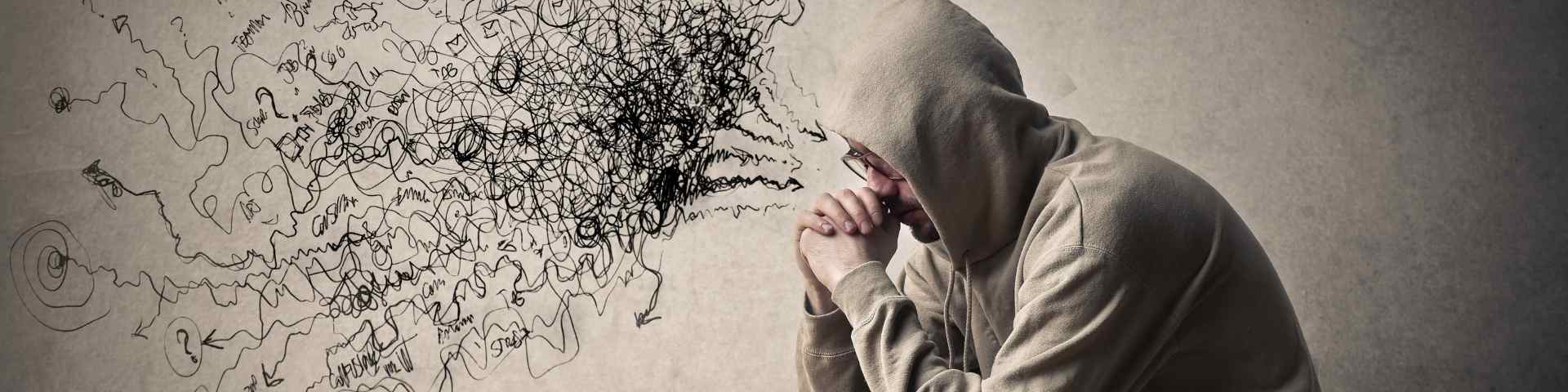
Every human being exists within two vibrational ranges. The first is the personality, where the ego resides. The second is the divinity within you: your higher self, the divine spark in your heart. This means your life unfolds along two parallel paths.
There are moments when the ego takes over. You feel tension, the need to defend yourself, or the fear that something important might be taken away. Then there are moments of joy, fulfillment, and genuine love, both for yourself and for others. Which path do you follow more often? And what does any of this have to do with the spirits of the deceased? The answer is simpler, and perhaps more unsettling, than you might imagine.
The ego is closely connected to our instinct for survival. It is the part of us that encourages selfishness, greed, and the persistent fear of not having enough. It whispers that we might lose what we possess, that life is a struggle, and that we must constantly fight to protect ourselves. In yoga philosophy, this fear is known as abhinivesha: the desperate clinging to life and the fear of losing it. According to this ancient tradition, it is one of the five fundamental afflictions that shape human suffering.
This is why the purpose of the spiritual path is, in essence, quite simple: to gradually diminish the influence of the ego while allowing the divine aspect of our being to expand. The ultimate goal is to transcend the ego entirely and fully realize our divine nature. Different spiritual traditions describe this state as enlightenment or ascension. But this is not a task accomplished in a single lifetime. Many of us, according to the belief in reincarnation, have been working toward it for hundreds, perhaps even more, incarnations. We do not overcome the ego in a single day. Its influence fades gradually, much like a deeply ingrained habit carried from one lifetime to another.
When someone follows the path of the ego, their vibration, according to this spiritual understanding, falls within the same range as that of earthbound spirits. And there is a reason for this. The fear of loss, the struggle for survival, jealousy, envy, and resentment are the very emotions believed to keep these spirits bound to the earthly realm. In the theosophical tradition, this vibrational realm is called Kamaloka, the world of desires and passions.

The principle is simple: like attracts like. Does this mean that many people are affected by spirit attachment or possession? Not necessarily. Experiencing these emotions does not automatically mean that someone is spiritually attached. Yet, within this understanding, relatively few people are considered entirely beyond the possibility of such influences.
It often begins innocently enough. A spirit of the deceased may approach someone for a brief moment, drawn by an emotion such as anger, rage, jealousy, or fear. A temporary connection forms, and when that emotional state passes, the spirit moves on. The bond was simply too fleeting to last.
The difficulty arises when these emotions return again and again, particularly when the person remains unaware of them. Repeated emotional patterns are believed to make someone more susceptible to attracting similar spiritual influences. What begins as an occasional encounter may become increasingly frequent, until the connection grows so close that it develops into a persistent spirit attachment aka spirit possession.
And when that unwanted visitor finally leaves? The rightful inhabitant of the body may experience an immense sense of relief, as though they have finally returned home to themselves.
So, what can you do? One of the most valuable practices is learning to examine your own emotions and thoughts. This process is called introspection, and its importance has been recognized for thousands of years. At the entrance to the Temple of Apollo in Delphi, where people once traveled seeking divine guidance and prophecies from the oracle, stood a famous inscription:
"Know thyself."
At first glance, it sounds like a simple command. Yet Plutarch, who served as a priest at Delphi, understood these words as a greeting from the god Apollo to those entering the temple. The message was profound. Rather than promising that the answers would come from some external authority, it directed the seeker inward. Toward the one place we so often neglect: ourselves.
Begin asking questions. What am I feeling right now? Where is this emotion coming from? Is this anger truly mine?
You can start with a simple exercise. Each evening, recall a moment during the day when you experienced anger, jealousy, or fear. Resist the temptation to judge yourself for it. Instead, gently explore what triggered the feeling and whether you recognize it from previous experiences. Have you felt this way before? Does the same emotion arise in similar circumstances? Or did it appear unexpectedly, without an obvious reason?
Over time, you may become better at recognizing emotional states that seem to arise from nowhere or feel unusually intense for the situation. That awareness is your first invitation to stop, observe, and look more deeply. Within the spiritual perspective described here, a person who does not understand their own inner world may be more vulnerable to confusing outside influences with their own thoughts and emotions.
Will this state of existence continue forever? No. It is temporary. The universe is constantly evolving, and according to this spiritual understanding, everything within it is gradually moving toward greater perfection, higher vibrations, and ultimately, the Light.
Sooner or later, each of us will have to release the lower emotional body, because its limitations will eventually stand in the way of our spiritual evolution. Some people are believed to be ready to begin that process right now. They are rare, however, and the path before them is extraordinarily demanding. Imagine throwing someone into deep water and telling them that their task is to remain completely dry. That is how difficult this work can feel.
We live surrounded by influences that, in this spiritual framework, are described as lower vibrations. They appear in our relationships, our fears, our reactions, and the emotional atmosphere of everyday life. This is why awareness must become a continuous practice.
Ask yourself, even in the middle of an ordinary moment: Is what I am experiencing right now truly coming from within me, or am I reacting to the negative energy surrounding me?
If you do not consciously work to free yourself from these habitual emotional patterns, they will continue to shape your experience. And it is not easy. Choosing greater awareness often means refusing to follow the emotional habits of those around you. You may find yourself responding differently, questioning what others accept without hesitation, or walking a path that few people seem interested in taking. Swimming against the current always takes more effort than allowing yourself to be carried along by it.
It is easy to assume that people experiencing spirit possession must somehow be society's outcasts, less fortunate or less spiritually developed than everyone else. From the perspective presented here, the opposite may be true. Only someone who has reached a certain level of spiritual maturity can begin to seriously consider releasing the lower emotional body and overcoming the influence of deeply rooted negative emotions. And therein lies a paradox.
Such individuals may experience greater suffering precisely because they have reached a stage where they can no longer ignore what is happening within them. Others may not yet feel the need for deep introspection. They may continue living through familiar emotional patterns without questioning them or recognizing the possibility of change. But those who have begun to awaken to their inner lives often become painfully aware of the distance between who they are and who they could become.
Within the belief in reincarnation, these souls are regarded as advanced along the path of spiritual development and exceptionally courageous. They are believed to have chosen physical incarnation knowing that they would be surrounded by difficult emotions, negative influences, and the lower vibrations of earthly existence.
Their task is not an easy one. Not everyone who suffers is weak. Sometimes, those who suffer are simply the ones who feel most deeply.
If you are struggling with what you understand to be spirit attachment, perhaps this perspective can offer you some comfort. Your suffering does not have to be a sentence.
It can become a catalyst for change. Within this spiritual understanding, difficult experiences can awaken a powerful motivation to free ourselves from the limitations of earthly existence. They may encourage us to grow, to question our old patterns, and to move along the path of spiritual development more quickly than we otherwise would. What once seemed like an unbearable obstacle may eventually become the very reason we begin looking inward.
But you do not have to rush. Nor do you have to walk this path alone. Every conscious breath, every emotion you learn to recognize, and every moment in which you choose awareness instead of reacting automatically can loosen the ego's hold, even if only a little. And a little, repeated day after day, can transform an entire life. The divine spark within your heart has never gone out.
It is still there, beneath the fear, the noise, and the countless thoughts that have persuaded you to forget who you truly are. Perhaps all it needs is for you to become quiet enough to recognize it again. Know yourself. And keep walking toward the Light.
About the Author:
Michael, a co-founder of The Dr. Wanda Pratnicka Center, holds a B.A. degree in psychology and is a spiritual teacher and healer, with a specialization in spirit removal. Under the mentorship of his wife Wanda Pratnicka, Michael gained profound spiritual insights into the nuances of spirit attachment phenomenon, and for many years, he played a crucial role in assisting her with the remote spirit removal process. In his leisure time, Michael finds solace in meditation, immerses himself in the timeless beauty of classical music, and cherishes tranquil walks by the sea.
Stay tuned for enlightening new blog posts EVERY SUNDAY - your weekly dose of inspiration and guidance.
----
ADDITIONAL RESOURCES:
1. You can find more information about common symptoms of spirit attachment / possession here:
2. How to check whether you or your loved one are experiencing a spirit attachment?
3. Want to learn more about how we remove spirits?

October 29, 2022
Load more
We offer FREE CONSULTATION.
Simply give us a call.
The Dr. Wanda Pratnicka Center
4602 21st Street PO BOX 1285
New York, NY 11101
Disclaimer: Our services are not intended to replace allopathic medicine, but rather to complement it. We do not prescribe any medications and/or medical treatments nor interfere with prescribed medications and/or medical treatments. The Dr. Wanda Pratnicka Center, nor any of its members, is not responsible for any individual's failure to seek proper medical attention.
If you are in a crisis or any other person may be in danger - don't use this site. These resources can provide you with immediate help.
Copyright © 2026 by The Dr. Wanda Pratnicka Foundation, All rights reserved





















 US
US 